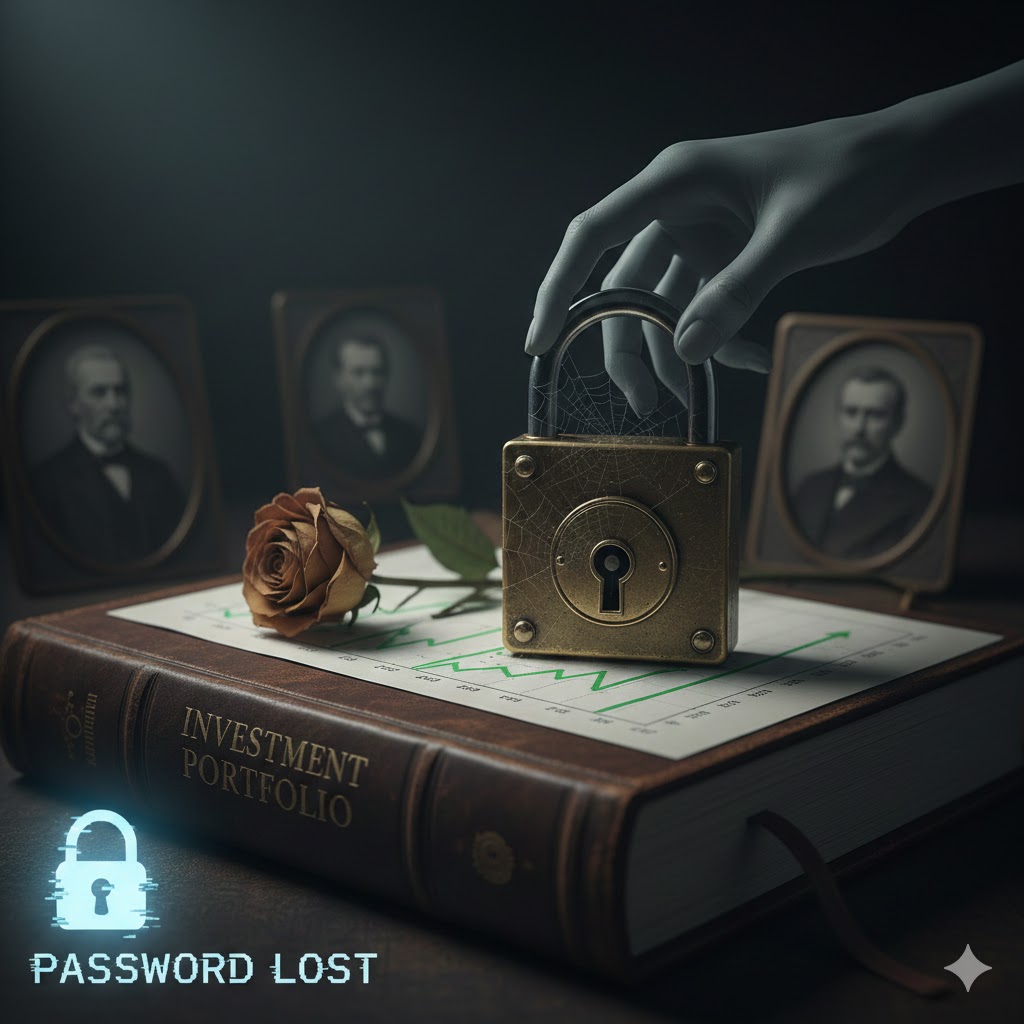
The most potent piece of investment advice might come from a seemingly absurd source: the forgotten corners of brokerage firm reports. The anecdote, widely shared in financial circles, suggests that a significant number of the best-performing accounts belong to clients who are either deceased or have simply lost their passwords and can no longer access their holdings.
While the original study is often cited as apocryphal, the profound lesson it teaches is undeniably true: For the average person, the best investment strategy is often to do nothing at all.
The Tyranny of the Active Investor
Why would the passive accounts of the absent-minded outperform the portfolios managed by diligent, living, and motivated investors? The answer lies in the deeply human flaws that sabotage returns—the behavioral biases that we are all susceptible to.
1. The Cost of Emotion
Active investors are driven by two powerful, profit-destroying emotions: fear and greed.
- Greed pushes us to chase returns and buy assets when their prices are high and news coverage is euphoric. We see the market soaring and jump in, often near a market peak.
- Fear strikes when the market inevitably corrects or crashes. Panic sets in, and we rush to sell, thus locking in losses near the bottom.
The inactive accounts, however, are immune. They do not sell during a crisis. They ride out the volatility and remain fully invested to capture the eventual market recovery and the powerful, long-term upward trajectory of economic growth.
2. The Drag of Fees and Taxes
Every time an active investor buys or sells, they incur costs. Even on modern, commission-free platforms, high-frequency trading often involves:
- Transaction Costs: Brokerage fees (even small ones), bid-ask spreads, and the sheer administrative cost of managing dozens of trades. Over decades, these tiny expenses compound and dramatically reduce the final wealth accumulated.
- Tax Inefficiency: In taxable accounts, frequent trading triggers short-term capital gains taxes. These gains are taxed at your much higher ordinary income tax rate. A forgotten account, holding its investments for decades, benefits fully from the much lower long-term capital gains tax rate or, better yet, utilizes the tax-deferred growth of a retirement account.
More News:
• Florida Business IPO Law Firm Nason Yeager
• Tampa Bay Government Affairs Law Firm Nason Yeager
• Top 20 Business Leaders in Florida
• Leading Spa and Wellness Experts to Gather at IECSC Florida for Premier Expo
• Can news website links help increase Google search rankings?
3. The Myth of Market Timing
Trying to predict the market’s movements—when to jump in and when to cash out—is known as market timing. For professionals and amateurs alike, it is a nearly impossible game to win consistently.
The data shows that a significant portion of the market’s total long-term gains is concentrated in just a few of its very best performing days. If an active investor is sitting on the sidelines, waiting for the “right moment” to get back in, and they miss just a handful of those best days, their entire long-term return can be severely compromised. The deceased account, by staying invested 24/7, never misses a single one.
The True “Best” Strategy
The success of the dead and forgotten accounts is not a morbid joke; it’s a powerful endorsement of passive, long-term investing, often referred to as “Buy and Hold.”
The optimal strategy for most investors involves a three-step approach:
- Invest Broadly and Diversify: Don’t try to pick individual winners. Instead, invest in low-cost index funds that track the total stock market (like the S&P 500 or the total U.S. stock market). This ensures your portfolio captures the returns of thousands of companies and diversifies away single-stock risk.
- Automate Your Contributions (Dollar-Cost Averaging): Set up automatic transfers to invest a fixed amount of money every month, regardless of whether the market is up or down. This eliminates emotional decision-making and ensures you buy more shares when prices are low.
- Leave It Alone: Once your plan is set, resist the urge to check your portfolio daily or make frequent changes based on the news cycle. The best thing you can do for your long-term financial health is to act as if you’ve lost the password and let the power of compounding and time work its magic.
The market rewards patience, discipline, and, ironically, a touch of neglect. In the world of investing, inaction is often the most profitable form of action.
?